Category: Physical pain and physical health

Somehow

[TRIGGER WARNING FOR SUICIDAL THOUGHTS AND ACTIONS, SELF HARM AND OVERDOSE This post may be disturbing please read with caution if this may be unhelpful for you. ]

Somehow it’s nearly morning. Well, it is morning. I’m numb and “out of it” like it’s not really me, but everywhere at the same time. I thought I came to the end. That was supposed to be it. But I’m still here.

I’m scared to write this because it makes it real. What I did. And what is. And that I’m still here and that it’s morning. No question.

(“The watchman counts on daybreak and Israel on the Lord” I can’t remember what Psalm that is right now. ..)

I’m scared to write because I don’t want anyone to hurt and it was noone’s fault but mine and no one’s doing but mine and my responsibility. I lost it, I snapped and gave in. I didn’t deserve it but they cared for me.

I know I was so nasty to someone who has only cared for me. I needed too much. I still do. I’m so sorry.

But I have to write this. I have to write this in order to go on. I’m scared and I can’t remember chunks of time.

So…

I got to the end on Saturday. I screamed. I smashed things in the kitchen. I cut. I took an overdose. A lot more this time. This time it was the end.

But it wasn’t because I’m still here. And I have to get up soon. I have to get up and get dressed and go out and get something to eat and then go to the hospital to see the psychiatrist and my therapist. I promised I’d do it.

I’m okay. I don’t want to scare people. I’m okay physically. I got help. I’ve been in the hospital Saturday and Sunday. I came home late last night. They monitored me – blood tests and ECG and blood pressure and everything – so I’m fine physically. They were kind. They looked after me. I ate. I saw the duty psychiatrist. They’ve sent a report to the personality disorder team. I already had an appointment set with my therapist this morning and I’m to go early to see the psychiatrist too. So I’m safe. I don’t want people to worry.

I’m going on. Nearly time I can get up. It’s cold this morning. I have to decide what to do about work and what do I tell them. I’m meant to be in this afternoon.

“The watchman counts on daybreak and Israel on the Lord.” Keep saying that and get up and it’s morning.

Ginny xx

A closing drawbridge and a silent cry – Eating Disorders and Personality Disorder – #5

A closing drawbridge and a silent cry – Eating Disorders and Personality Disorder – #5

Protection in emptiness

Eating Disorders and Personality Disorder – #5

“You will never touch me”

[I am sorry I have not updated this series for a while!]

In my first period of anorexia, one of the greatest functions of my eating disorder was a kind of defiance and separation. Anorexia definitely changed my personality, or rather, it was often as if there was a separate personality, much stronger than my own, rising inside me and gaining strength as I got thinner. She was strong and defiant and could not be hurt. She could keep me away from everyone and every thing that hurt me.

I was about 15 by this time and had suffered at least 11 years of emotional, physical and sexual abuse and exploitation. The family unit of my mother, my father and I were increasingly isolated and cut off into my mother’s sick (in both senses of the word) world and anything that tried to penetrate it led to terrible consequences (her sickness, her threats to kill herself, her threats to abandon the family, her threats of breaking up the family or of me causing her and my father to die, be taken away and so on). Anything that posed a risk to the world of her twisted thinking, delusions and manipulation had to be invalidated or removed. Visitors weren’t allowed to come into the home. Any social contact had to be planned and rehearsed beforehand, carried out to Mother’s specifications, reported back to her, analysed against her pre-prepared script. The daily routine had to run exactly according to her needs. She had to be recognised as super-human, a genius that nobody could ever sufficiently understand, the victim of everyone’s cruelty and misunderstanding who was so gracious as to forgive everyone because she “loved” them so much. Appease, pacify, agree, conform….the disaster wouldn’t happen, maybe….

My eating disorder couldn’t appease, pacify, agree or conform. It couldn’t be manipulated or invalidated. My eating disorder could defy, protect, shield, consume, grow stronger, defend, refuse to succumb and refuse to be controlled or analysed by her and even refuse to recognise her at all.

I remember that eventually, as my weight dropped and dropped, even Mother started to worry I was too thin and getting weaker. She’d encouraged my eating disorder at first, requiring my weight loss and dieting and reminding me how ugly I really was. Eventually it snapped out of her control and I think it was the one thing that actually scared her.

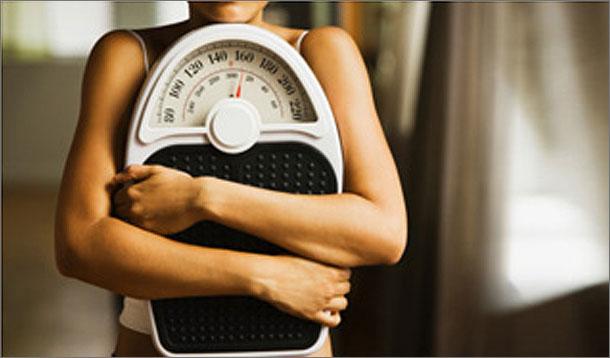
One evening, she called me into her bedroom. She told me to get undressed and stand in front of the full-length mirror. She’d done this many times before in order to shame and humiliate me and to slowly and methodically point out all the bits of my body that were bad and “too plump” and “too much fat”. Usually it followed a ritual weighing and reporting of my weight to her, her disbelief and being forced to repeat weighing myself in front of her. Now I flatly refused to weigh myself in front of her, but delighted in doing it in my bedroom in secret (always in exactly the same place, lining the scales up with a particular pair of floorboards) and was satisfied with the thrill of seeing the pounds drop. But for some reason, this day, I did obey her to get undressed and stand in front of the mirror. This time, instead of pointing out the places I was too fat, she pointed out where it showed I was too thin. Even I was shocked when I was forced to look at where the normal shape of my behind had started to flatten and disappear at the base of my spine. She continued telling me I was too thin and how she was worried.

A thrill of power went through me. It was frightening but I had never felt power like that. No, I thought. No. This is my body. All mine and you will never touch me again. In total silence I walked away from the mirror, away from her, out of her bedroom back to mine and got dressed again. I resolved to lose as much more weight as I possibly could and get as sick as I could, because this meant she would never ever touch me again. I hated her at that moment. I don’t think I was thinking of the sexual invasions, specifically (and indeed a lot of them I didn’t even accept as invasions at that time), but of all the hold she had on me and all the hurt. She would never do it again.

I had an awareness, somewhere, that she was worried for me and she was upset, and that my father was too. At that time, the need for the protection and power of my anorexia was much greater. I had become quite a nasty person, disregarding the hurt I was causing people who loved me (my dad loved me, if my mother didn’t). Or the anorexia in me was quite a nasty personality and I was becoming that personality. The power of anorexia was stronger than my usual nature.

Of course, it didn’t really stop me getting hurt, and it hurt lots of other people in the process. Eventually, it was acknowledging my father’s fear of what was happening to me that started to bring me out of this first period of starvation. To this day, I am not quite sure what, at that time, made me acknowledge that and shifted the balance of power towards empathy and reason, and away from the protective force of anorexia.

Ginny xxx

Out of it

I’m going between boiling anger that I can’t stand (a force rising inside me which I can’t swallow down, just force and power uncontrolled and bursting free) crushing anxiety with spiraling thoughts, lists, growing out of control faster than I can count, no air to breathe, dread that I can’t surmount, and numb.

Numb. Nothing. Stopped. Watching. Un-engaged. Dumb. Deaf. Hearing what everyone else says but it makes no sense and causes unbearable sensations if I try to respond – I need numb.

I’m drinking tonight to make sure I stay numb and make warmth and cotton wool replace the ache, distancing the hurt from my dissociated state so it can grow without sensing the raw pain or maddening and crushing demands of the ‘other’ (real) world.

The pain from my gynae problems has been scary too, as well as the arthritis. It’s almost funny – completely messed up inside and the physical stuff out of control too, things ‘breaking’ one after the other. Nothing medically serious but it does seem to make me as useless as possible in the real world.

I don’t often drink and it’s a dangerous and stupid choice, especially now. I’m in a really dangerous state right now. I tried and couldn’t get help. I can’t choose rationally what to do. I’m saying it’ll just be tonight and tomorrow I’ll try to face it all again.

Hurting tonight

It hasn’t been a great week.

Hurting with physical pain from gynae problems and joint problems.

Going between guilt for worrying and burdening my family and not being able to do what I should, and feeling cut up that I’m “in the way” to them and need to be compartmentalised so I don’t intrude on their life – the part of it they actually want not just feel obligated to do.

Seeing far too many things. ..scary things. ..that aren’t there… that are hallucinations from memories that grip me and shake me.

Wishing someone would hold me and tell me it would be alright even when the flashbacks come.

Working through water or a fog each day and knowing I’m getting it wrong and doing wrong and so so tired.

I slept about 4 hours tonight if that. Tomorrow is group therapy again. I am so scared to go. I will go because I mace this commitment to everyone in the group, the therapists, and to trying to get better, to God, and I won’t throw away what I’ve been given. But I’m scared. I don’t know where we are, I don’t know how to be, I don’t know who to trust, and I can’t trust what I did trust or where I thought we were before. Everything unraveled last week. I wish I need not speak. I wish I could just sleep and stop it all.

I will try to go forward thankful. I will ask thankfulness for another day, to learn to thank our God for revealing His loving kindness in the tiny little helps of each day and pray to notice and see them not just the mess in my head. I will try to work to make something beautiful – even just draw, colour, sew, write to my family and my closest friends who mean so much to me simply by still somehow being here.

Somehow this moment will pass but good will remain. I’m trying to believe.

Can’t you see they’re in so much pain?

NB this post refers to the films The Green Mile and The Perks of Being a Wallflower. This post is about BPD and experiences of others’ emotions however:

Slight movie “spoilers” alert if you haven’t seen the films and are planning to 🙂 ! Also, whilst both films were interesting and I definitely identified with characters, the first contains a few highly disturbing scenes and themes and part of the second was triggering to me at the time I watched it, though I think only through similarity with my personal experiences. Therefore to be on the safe side, I’d advise caution if you do decide to watch the films.


“Mostly I’m tired of people being ugly to each other. Tired of all the pain I feel and hear in the world every day. There’s too much of it. It’s like pieces of glass in my head all the time.” – John Coffey in Stephen King’s The Green Mile

Someone shared this quote with me today. It was years ago I saw the film “The Green Mile”. It is not the kind of film I normally go for;  it was watched as someone else’s choice. It was thought provoking and also deeply disturbing. I would not watch it again now as it’s too harrowing but it has a lot to say about our judgement of good and evil in ourselves and others and how this affects how we treat our peers, those we work for and those in our charge.

“The Green Mile” is set on death row in the USA. John Coffey is a black American prisoner who has been sentenced to death accused of the murder of the two children of the plantation owner for whom he worked. If i remember right he was sentenced because he was found at the scene. In fact he was not the killer; he was trying to save the children. Coffey has a super-normal (supernatural or spiritual?) power to heal people. He touches them and draws the illness out of them through his own body and then “breathes” it out and away. Coffey knew the children had been lured away and attacked and he was at the scene of the crime because he was trying to save them. During the film, Coffey seems unbelievably calmly accepting of the horror that he will be executed and shows astounding compassion to his guards and other prisoners.

In the horror of death row the introduction of this super healing power seems somewhat jarring. Perhaps that’s part of Stephen King’s intention. When we watched it my friend wondered wouldn’t it have been better if it were totally realistic without the introduction of the supernatural realm. I can see her point. Then again I think King integrates it powerfully into the story. In a place of utter despair and darkness on death row, good cannot be extinguished. Compassion and healing still exists through one poor man who continues to do good through being utterly judged, rejected, broken and condemned. No matter how weakened he is, he can still do good and he’s a channel for healing.

He is in the broken and condemned state he’s in precisely because of his desire to help, to heal, to do good even when people judge him wrongly, and because of how much he knows other people’s pain and hurt and needs. Had he not recognised the children were in danger, searched and tried so hard to save them, he would not have been found at the crime scene and would not have been accused…. through the film we see other examples of how Coffee’s compassion and feeling for others overrides his own needs or his own pain.

The quote I started this post with expresses some of the cost to Coffey of feeling so much other people’s pain and needs. I those of us with personality disorders and post traumatic stress disorders, or who have suffered abuse or traumatising relationships,  can struggle just the same.

We feel so very much what others feel. It goes beyond empathy. It goes beyond wanting to help. It is a mental and bodily sensation. We actually feel what the other person feels. Sometimes we feel it more suddenly, more clearly or more overwhelmingly than our own emotions and needs. It can be a shocking or crushing wave or grip. We can’t breathe or we tense and jump as though we’ve been hit. We feel something in us twist painfully and connect to the other person’s hurt and we feel more than a need to take it from them – perhaps a longing, draining need to take it, rather as if we could do as Coffey does in the film.

It can be too much to bear. Too much to be around anyone and so very tiring. After social situations we may need time to rest and recover and go away to some quieter, colder, more numb place in our mind. Or we need something desperately to distract us and this may be dangerous impulsivity, self harm, drink, drugs and so on, because we need anything at all to get away from the knowledge of such hurt and pain in the world that we can’t draw out.

For some reason it’s the feelings ofhurt and need or pain or anger that overwhelm us and fill us more powerfully than good feelings in others such as joy or excitement. I don’t entirely know why.

There’s another film that spoke to me about this too, “The Perks of Being a Wallflower”. The main character has suffered childhood abuse and at the end of the film, he asks the doctor treating him, “can’t you see that they’re in so much pain? ” – can’t you see that everyone around is in so much pain, because he can see it and doesn’t know what to do. I can see it and feel it and take it all on and I don’t know what to do. It can be so impossible to carry on through that feeling and so tiring, that we withdraw totally to protect ourselves. Then we seem cold and that we aren’t making any effort to help anyone and thinking only of ourselves – when actually we ate feeling so very much and so much wishing we could heal others’ pain.

In “The Green Mile”, despite being judged and condemned, Coffey continues to feel everyone’s pain and continues to heal people. He is utterly misunderstood. His power for good is hidden to almost everyone. But even there in death row it can’t be stopped.

Even if we are utterly weakened and broken, even if nobody understands, even if we can’t tell anyone yet what is really happening,  the good we can do will still remain. Even if we feel we’ve totally failed, there is good in us, even if it’s hidden from us too just now. Not seeing it doesn’t mean it isn’t there. Paradoxically, though our ability to feel so much has a great cost to us in pain, in being drained and spent and hurting, it may not be a bad thing. It may become something that enables us in the end to help and actually even connect to people.

I think learning to believe good in ourselves lasts even in weakness and apparent failure is a big part of getting there. So is finding a way to stand experiencing what we feel of others’ emotions and our own, so that we can use these feelings beyond empathy to be able to help people rather than having to withdraw because we cannot stand it. So far I really don’t know what the answer to this is, as yet.

Ginny xx

A closing drawbridge and a silent cry – Eating Disorders and Personality Disorder – #3

A closing drawbridge and a silent cry – Eating Disorders and Personality Disorder – #3

Protection in emptiness

Eating Disorders and Personality Disorder

Chapter 3 – My History, 2 of 2 : 16+ years – adulthood

From the summer I turned 16 I started slowly and painfully to gain weight. It was frightening and felt out of control but at the same time it was about the one time I was cared for by my mother.

Even so it was tightly controlled by her. If I couldn’t keep to my lowest, most broken weight, I did want to please her by the way I gained weight back. Sounds weird, I know.

But it wasn’t long before she flipped again into her hatred of me. As I was “recovering”, she made my emotions – rising rapidly to greater extremes as I lost the perceived safety of the anorexia – all unacceptable and to be dismissed because, she said, it was all because of the eating disorder. I had to realise what I was putting the family through and how impossible I was to be around.

Then as I continued to gain, the “fat” talk returned. Now she even claimed that my father agreed with her. “You’ve got too much fat on you.” “Daddy was saying last night how he is very worried about the amount of fat you’ve got on you.” “You need to eat fewer carbohydrates and stick to protein. You’re getting far too much fat.” I know now that this was when I had only by a few pounds left the anorexic weight range, to enter the underweight range.

My weight was still going up. I was eating now but knew I was out of control. I tried to stick to what I thought was healthy eating during the day, but at night it was as if the compulsion to eat took over. I couldn’t stop. After dinner when I was doing my homework I’d go back and forth to the kitchen. Even though my parents could see, I couldn’t stop. It was as if something was inside me demanding more and more to eat and it was never enough. I longed for the control of anorexia to be back. But somehow I’d lost it. I was utterly repulsed and disgusted at myself that I could not stop eating. I longed to go back to starving but where had the energy to do it disappeared to?

If I didn’t eat, I couldn’t concentrate on my work. And I was driven to do the very best I could at my schoolwork. It was what my mother needed. Perhaps I was terrified she’d accuse me of “pretending” again and punishing her if I did not do excellently. Her grandiose beliefs about my intelligence increased about this time and she thought I was a “genius” and that “nobody could cope with my intelligence”. I longed just to be normal. Not to have to achieve amazing things and with no superb powers. I knew the grandiose things she said were not real but it frightened me a lot.

Equally she continued to pressure me to diet, to eat only salad during the day, she’d look at me hard and tell me how ugly I was, she’d watch me with a look of utter scorn whilst I was eating, she did not allow me to buy any clothes apart from my school uniform and anything I had needed to cover up how fat I was… she’d tell other people how fat I was… if anyone said anything complimentary to me in her hearing, she’d tell me afterwards how it was very nice of them to say it but I had to remember that they were only saying it to be kind or because they were worried that I might get an eating disorder again, and I must be clear that really I was very fat.

Throughout sixth form, my weight increased, and by the time I began university I was objectively fat. I was binge-eating in secret by this time and furious with myself for it. All the while I was longing for anorexia again but saw myself as a complete fraud and disgusting pig. Why couldn’t I just stop eating again? Every day I’d promise I wouldn’t eat but I’d get through a few hours, then binge.

In the spring term of my first year, my relationship with my mother was breaking down completely and I felt I was drowning in a feeling of emptiness, sadness and I was going through a religious struggle as well, believing in God but terrified of Him as well. Physically I was exhausted and following glandular fever was ill with ME and fibromyalgia which were not yet diagnosed.

Somehow, the pain enabled me to stop eating again. Over a couple of weeks, I reduced what I was eating very fast. I stopped eating solid food and survived on slimline Cuppa-Soups and diet hot chocolate. For 8 weeks, this was all that I consumed. I lost a substantial amount of weight. My friends concerns and discovery of my “eating” patterns led me to start eating again out of guilt that I was hurting them. But I continued to restrict and was sure never to go over 1000 kcal per day.

The next year or so continued like this. My ability to restrict food was still not as strong as I wanted and I lapsed into bingeing. Now I had discovered purging as well. I am not sure how. I started to take laxatives after binges, or try to go running (which I couldn’t because of the post-viral exhaustion). I would overdose daily on laxatives and not care that they made me too ill to do my coursework.

Still I was utterly repulsed by my body. It represented everything foul and uncontrolled I believed was in me.

When I worked in a department store over the summer between my second and final years at university, the physical activity helped me lose weight and some of the anorexic mindset returned. I reduced and reduced my food during my final year and my weight plummeted again. I had stopped the laxatives because they made me too sick to go to my classes and do my work, but if I did binge I would make myself vomit afterwards. Soon it became a compulsion to do it if I ate any more than salad. Doing it until I could tell myself I was sure I had got rid of everything and punished myself enough (ie until I saw bile and blood and could no longer stand up by myself) was “safe” I thought, and I was addicted to the pain and emptiness and the “high” that came afterwards.

Although my weight didn’t drop quite as low this time as it had when I was 15 or 16, mentally I was even further into the clutches of the disorder. It was the best way I knew to punish and weaken myself. I think I did realise I looked ill and realised that I was too thin. Nevertheless, eating, consuming, meant that I was disgusting and I was terrified that I would go out of all control. I did fear fat but even more I feared everything it meant to me and feared not hurting myself.

Around this time, just after I finished university, I was received into the Catholic Church. I was learning not to fear my God and perhaps on some level to understand that he did not think that I was dangerous and that my relationship with Him did not mean punishing myself enough for the badness I thought was in me, before I came to Him. The “God” I had invented in my head during my childhood (before I understood anything of the Christian faith or any more than snippets of the Gospels) was very much a judging, watching, God and to whom I had to atone for all the bad things that I had done.

Shortly after this, I started to want to recover. I was still disgusted at myself but on some level I did want to get to be “normal” and to not be dominated by the disorder. I started eating again. I was very ill physically with ME and a back problem and could not walk without crutches. As my weight went up I got scared again and, without a job at this time, I turned back to the laxatives and overdosed worse than before.

It is hard to really understand or remember quite how I got out of this stage. Perhaps the ability to restrict slipped away again. Perhaps in my struggle to eat normally I did start to win a bit. Perhaps as I got further from the extreme starvation state, my body did not have the drive to binge-eat as much food as possible whilst food appeared to be available, and my control of my appetite returned. Perhaps I just got better at resisting the hunger when I felt the urge to binge (or at replacing food with coffee!). A doctor once told me that most people who recover from anorexia go on to develop binge-eating disorder, because of the physiological and psychological effects of such starvation and being so underweight.

By my mid-20s, I was not underweight and by all external appearances, was recovered. I have to admit that I had taken steps out of the “safety” of anorexia or the temporary “comfort” of bingeing, to more normal, regular eating and an acceptable weight.

The problem was what this left me with. What I discovered lay beneath, which I could no longer conceal and suppress. When these things are too terrible, punishing myself with food / no food, with the distress of purging, is still a compulsion that I have to fight – and give in to at times. An extra struggle at the moment is that I take several medications which slow the metabolism and cause weight gain, and that physical disabilities prevent me from any exercise but walking. Poor finances also mean that I cannot eat as healthy food as I would like and the cheaper options are often higher calorie density. My weight feeling out of control is highly distressing because inside, wishing to be small and tiny is still very much there. That’s the safe thing but it’s now a safe thing I can’t seem to reach to.

I am very thankful that I have recovered to the point I have and I realise the terrible health consequences of staying at a starvation weight or purging regularly. I know the upset it causes to people who care (no matter how much I should wish to be invisible or wish nobody would be hurt but me!). I don’t want to do this to anyone. I know the physical effects prevented me from working (vomiting and stomach upsets from overdoses, heart palpitations, collapsing, debilitating weakness, cramps, regularly catching viruses and infections, poor concentration and memory, and so on) and it would be irresponsible to do something that meant I could not work. I don’t want to be anorexic again but in the dark times, I do in some way think that I wish I could go back there, at least to the place in my head that it opened.

In my following Chapters I’m going to try to describe what that place was, what terrible things I had to admit did lie beneath, and what the eating disorder meant in my life.

Again, I am sorry that this Chapter is not very well written. There is a lot that I am not sure how to explain and the memories are emotive. I’ve also tried not to go too far into my thought processes at this stage because I wanted to give an overview of my eating disorder history here, then in the next Chapters I will go on to say more about the reasons I didn’t eat, purged or binged.

A closing drawbridge and a silent cry – Eating Disorders and Personality Disorder – #2

A closing drawbridge and a silent cry – Eating Disorders and Personality Disorder – #2

Protection in emptiness

Eating Disorders and Personality Disorder

Chapter 2 – My History, 1 of 2 : ages 3 – 16

In this chapter, I’m going to tell you a bit about the history of my own eating difficulties, as an overview. I am not going to go into detail of my feelings and the reasons I started to restrict or overeat at each stage, as I will go on to that in subsequent chapters.

I have done my best not to go into any detailed description of the techniques I used to eat less or conceal how little I was eating and so on, as I understand that this can be triggering for people who are unwell with eating difficulties.

It has proved much more difficult to write this “history” than I anticipated. I think what lies behind each of the periods of my life is more raw than I had admitted to myself.

Although I probably did not meet clinical criteria for an eating disorder until I was about 15, my relationship with food and my body was distorted throughout my life from preschool age.

I first knew I was “fat” when I was 3 years old. I remember vividly sitting on the stairs. It was shortly after Easter. On Easter Sunday I had been given a chocolate Easter egg with my name iced on it, and some other chocolate treats. As a typical child, I guess, I delighted in the egg. I shared it with my Nana and my parents but probably not very generously! (Typically, again, for a 3 year old.) I remember that on that Easter Sunday, I was praised for sharing. But then that day on the stairs (I don’t know how long after Easter), my mother was calling me “greedy” and shouting at me for how I had stuffed my face with chocolate and everyone else just had a crumb. I remember so clearly and it hurts even now. I remember knowing I was greedy and bad, and FAT. How exactly I knew to make that link, I am not sure, but I knew it meant FAT, and BIG, and that was bad. Perhaps I had already absorbed some of my mother’s preoccupation with food and body size.

My mother began weighing me in secret around this time, and keeping the fact hidden from my dad. (My dad recalls this and has told me about it. I myself recalled it from when I was a little older, maybe 5 years old.) When my dad found out what she was doing, he told her to stop, and she agreed, but actually continued with increased frequency and forbade me to tell my dad.

From the age of around 6, she would regularly tell me that I looked “too plump” and would send me to weigh myself and report back to her my weight. She would not believe the figure I told her and would then have me get the scales, bring them to her bedroom or the upstairs landing and weigh myself in front of her. Then she would stand me, often undressed, in front of the long mirror in her bedroom and point out the bits of my body that were too plump and too fat. Then I had to go on a diet until she considered I had lost enough weight. She did not want my father to know so I still ate the main course of the evening meal, but the diet meant no snacks or biscuits (most of the range of sweets and chocolates children ate were banned in any case) and something like lettuce and rice crackers or a small amount of plain pasta for lunch. Not the most extreme by any means, but I didn’t like it. When I got older, it meant exercise in the living room as well, sometimes with exercise videos and tapes.

I did dance classes from the age of 3 or 4; two or three classes twice or three times a week. This was about the only contact I had with other children and the outside world (my mother taught me at home until secondary school age and almost completely restricted any contact with friends or wider family members). In my classes, I knew that I was bigger than the other girls. I think partly I actually was rather a fat child and partly I was very tall for my age and so of a larger build than the other girls. In any case, candy pink leotards and tights or white ankle socks were not the most flattering outfit, to say the least!

I wanted to be little, thin and tiny. I wanted to be the smallest, not the biggest. From as soon as I could start to read (which was early, around 5 or 6 years old), I would go through my mother’s Prima magazines whilst she was asleep (there was a big stack of back issues beside her bedroom mirror).  I’d look at the pictures of the women there and, as I got older, read the diet features where you were supposed to live on grapes, yoghurt and hard boiled eggs. I remember in particular, one picture of a woman in a sparkly red dress. This was the late 80s when the extremely thin, emaciated look of models was popular, perhaps even more than it is today. I had pretty much uncensored access to these magazines whilst my mother slept. (My dad would go to work but my mother frequently would not get up until a good 2 – 3 hours or more later, during which time I’d play by myself or read books and magazines that I could find lying around.)

My mother, meanwhile, was very concerned with her own weight. She was convinced that she was fat (she was not). Her morning toiletry and beauty routine took an incredibly long time. She would spend a long time on extremely precise application of a lot of make up, then in front of the mirror looking at her body. One of her delusions with her schizophrenia was that she was being bitten by insects or that there was poison under her skin, which she would try to scratch out in front of the mirror. Her eating patterns were very irregular. She would eat nothing at all during the day and instead smoke a vast amount and drink coffee and later, wine. She would then eat an evening meal (except during the terrible arguments, when she might not even eat this). I thought that was how grown up women ate and waited for it to happen to me that I didn’t want to eat any more during the day. I didn’t have enough contact with anyone other than my mother to know that this wasn’t normal. I thought something was wrong with me that I still ate breakfast and lunch.

Food was also a big focus of my mother’s ill thoughts and actions. Arguments often started during the evening meal. If the argument (her shouting, crying, threatening and so on) had already gone on all the day until she suddenly went away to bed, it would resume over dinner on my father’s return from work. When I was older and had been out to school during the day or, rarely, elsewhere, dinner was the time for her cross-examinations about what I had done, what marks I had got, who I had seen, what conversations I had had, what I had said and what the other person had said, usually followed by a rehearsal of why that was not good enough and exactly what I had to say the next time and what the  other person would say in response.

During dinner she would watch me intently, observing in minute detail how I held cutlery and crockery, commenting and criticising and even accusing me that particular mannerisms or movements were done to punish her or because I was “pretending to be a little girl” and knew it would upset her. My father and I had to give effusive praise of every part of the meal if she had cooked it. She had a rotation of elaborate dishes. Not liking something was not acceptable. Other times she would completely stop cooking at all for months on end. The food had to be set out in dishes in a particular arrangement on the dinner table. She would eat with particular precisely repetitive actions that on top of everything else, just raised the tension to absolute boiling point. If she was eating yoghurt from a bowl (it had to be decanted into a bowl, never eaten from the pot), she would circle her spoon twice clockwise and twice anti-clockwise round the bowl, then tap it three times on the top of the bowl, before taking each mouthful. As a result, she ate incredibly slowly. My father and I had to sit still until she had finished. (Even writing this my anger is boiling!) If she was angry, or going to accuse me of punishing her in some way, her actions became more elaborate and pantomime-like. It was frightening and the spring that lived in my stomach around those years coiled tighter and tighter waiting for the explosion that came no matter what I did, anyway.

By the time I went to secondary school aged 11, having been taught at home by my mother from 4 – 11 years old, I was probably a completely average weight. I was still tall although not quite as extremely so as when I was younger. I was not particularly slim but I was not fat either.

At school, able to choose what I wanted for lunch and with some spending money for break time, suddenly I was away from my mother’s intense scrutiny of my food intake. She would always watch me extremely intently if she was sitting with me when I ate. At dinner time I hated the feeling of her intense gaze. It was strange. In other ways she almost ignored my food – for example, I got my own breakfast (unless my dad did before he went to work) and lunch from the age of around 6 years old. After her hospital admissions started I often cooked all or part of the family evening meal, when I was around 8 years old. But when she was present, she watched intently, worrying and judging and controlling.

So with this new-found freedom at school, I wanted to try all the foods my friends were eating which I had not been allowed. I wanted to eat sweets when they had them. I was hungry with the busy school schedule. The result was I did definitely have too much candy and sweet food in my diet. I ate it in secret from her, fearful of what her reaction would be.

Unfortunately, when I was around 12, my physical health problems started, first from an ankle injury and then a serious knee injury, following which I was on crutches for a long time. I have a mild form of joint hypermobility which did not help.

Not able to continue my dance classes or to join in sports or move around so much whilst I was on crutches, my weight started to go up. I yo yo’ed for a while, restricting severely when I was on a diet (drinking only fizzy drinks during the day at school and eating nothing) and at other times eating far too much sweet food. My physical health problems did not really get any better from this age and I was in constant pain in my legs and back (apart from a brief period when I was about 14).

By this stage, my mother was going into hospital with increasing frequency. When she was at home, she seemed the more angry with me. I was starting to challenge more her world that was wrapped up in the schizophrenia and closed in at home, I guess. She became angrier with me for my weight. The weighing had become less frequent but she would still call me to stand in front of the mirror and undress for her to show me what was wrong with my body. I was plenty old enough now that I did not want to do this in front of her.

Nevertheless, I did want to lose weight. I still wanted to be the thinnest, the smallest, the youngest. Over the summer I was 14, turning 15, I started to diet in earnest and this was probably the start of the longest period I had yet spent on a diet. I also started cycling into the next town, swimming, then cycling home. I had gone from being fairly inactive to doing a lot of activity. My stamina had increased and I pushed and pushed myself. I would swim 30 – 50 lengths of the 50 metre pool and cycle 5 miles there an back. Though I hated my body at this time, looking back I can see I was strong and fit for perhaps the first time. All I saw was fat, and my mother ensured that it stayed that way and commented constantly on my food combinations and portion sizes and if I went down a clothes size, would say it was ridiculous and I could not be that size, the clothes were sized wrong and I was much bigger. Nevertheless I enjoyed my swimming and cycling. It gave me some freedom to get away from my mother and out of the tiny village where I grew up. I was free of her whilst I was cycling and swimming and it was something she couldn’t take over.

When I went back to school that autumn, I was pleased with the comments on my weight loss. I continued to further restrict my food intake and fill up on fizzy drinks. I would skip breakfast, hiding it from my dad, and eat only vegetables sometimes with a tiny bit of potato or pasta at lunch time. I was in a musical production with my school, which I also loved (plus more time staying at school for rehearsals equalled more time escaping my mother). I was losing weight very rapidly now and by the time the performance came, the costumes that had been ordered to fit to me a few weeks earlier were hanging loose and had to be pinned in. I collapsed from exhaustion on one day and was so very cold and could not get warm. Although nobody appeared to notice at the time, and I certainly did not acknowledge it, I was probably entering the underweight range at this point.

I then took my dieting further and further and could not stop. My memory of this time is really not at all clear so it is hard to write about. People started to express concern – teachers and even other children at my school who normally hardly paid me any attention at all. I hated the concern and attention and was angry inside. I didn’t want anyone to notice me. I didn’t want anyone to stop me. I was fine. They should leave me alone, I thought. Nothing was wrong and what right did they have to try to reach me. They didn’t understand.

I kept on going swimming in this time, but my energy was now wearing out fast and the distances that I could swim were reducing. It was as if a switch flicked. For weeks I was able to push myself on, swimming 50 or 60 lengths of the pool despite being underweight, determined to go further and further and wishing I could keep going forever. That was safe and everything else stopped. But then within a couple of days, the power had entirely gone. I was so, so cold in the water. It was hard to move. I was being dragged down and it was so so very cold. Everything was pain and not being able to breathe. Even getting changed and getting into the pool took longer and longer and I could see the teachers watching me now. Suddenly it wasn’t where everything stopped anymore – I was being watched there too. I can still remember the last day I went swimming and the cold I felt then somehow seemed to get right inside me and I could not warm up and the feeling did not leave me for years.

I was still dropping weight and by now experiencing physical effects. Downy hair grew over my arms. I was shattered all the time. I caught a cold and cough that I could not shake and would cough over and over in the mornings waking up. It hurt. My skin cracked and split and didn’t heal. I was freezing cold and even basic things like washing and changing became painful because I could not bear taking my clothes off – partly from hatred of my body but a big part of it was the intense cold. I bruised easily. I injured my toes in a fall and the bruising did not clear up for months. I started losing bladder control, often barely making it to the toilet in time. Moving anywhere was such an immense effort and I walked more and more slowly.

Somehow this did not stop me or shock me. I brushed everything off. Nothing mattered because it was all obscured by the need to become smaller and disappear and shrink. The drive not to eat was overpowering. It was a desperate, driven, angry need.

My parents were late to express their concerns. I had done quite a good job of hiding from them what was actually going on and how much food I wasn’t eating. The illness made me nasty and devious. I did not tend to wear revealing clothes anyway and wearing more and more layers against the cold hid how thin I was.

When they did express concern I was furious. It was probably the one occasion on which they both, eventually, when I was severely anorexic, expressed unified concern for me. This stunned me. I hated inside that I was hurting and worrying them. Yet, starvation was stronger.

It was my dad who got me to admit to having a problem with my weight. He spoke to me one morning before my mother had got up and there was something in the distress in his eyes that finally shocked and scared me. I admitted that morning that I had a problem. I was 15 years old.

There were still many months before I actually began to regain the weight. During this time I suffered a serious back injury from which I still have disc damage. I was painfully helpless and I think this made me start to hate the disorder. I was walking with crutches and could not get up from a chair or out of the bath without help. The starvation which had previously protected me now threw me into far more intimate dependency on my mother than I could stand.

Nevertheless, I received very little medical input or help. My memory around this time is again very very poor. It was a really distressing time and I can remember arguments I could not cope with and immense sadness and fear and anger. I know now I was causing my parents a massive amount of hurt and pain and I feel terrible guilt for this.

My mother, in her illness, was adamant that I should not have help from the GP or specialists. My GP wanted me to attend a centre nearby for children and teenagers with eating disorders and to go to therapy and group sessions there. My mother did not want me to have this. She told me what to say to the doctor and what to hide so that I would not be sent to this centre. As she had done with the threats of her, my dad or I being sent away when I was younger, she made the idea that I might be sent away to a hospital into a terrifying thing that would destroy her and mean I was sent away from the family permanently.  She coached and rehearsed me on exactly what to say. She said that she had to be in complete control of my food.

For some reason, her power over me was so great that I went along with what she wanted me to say. For some reason, the doctor believed it. For some reason, my father did not know what was really going on.

So I didn’t get the referral. I didn’t see any specialist. I saw the GP for monitoring a few times, where I’d be weighed and spout the rehearsed sentences that would make it clear that I did not need any help and supposedly was completely in control.

What realised a few years ago, when I was working in an eating disorder service, is that at this time at the age of 15, my BMI was about 13 (I will not share my weight as I know that this may be sensitive and triggering to anyone in the midst of struggling with anorexia). I had Anorexia Nervosa so severe as to be considered life threatening.

When I realised just how unwell I was when my mother had done all she could to prevent me from getting help, my view of her started to change. I believe now that she prevented me from getting help from a specialist because she knew that if I was seen by a psychiatrist, the abuse she was subjecting my dad and I to might be discovered.

A physiotherapist I was seeing for my back injury realised exactly what was going on, I think. My mother hated her. The physiotherapist urged me to try to get more help. I was too much wrapped in my mother’s constructed world to understand what was happening to me. I could not speak outside of what she had told me to say and pretend was true.

I started to gain weight and I could walk again, but just as she said, she got complete control of me again.

This is the first time I have written about this period in my life. It is very very hard and it feels incredibly shameful. I am not ashamed of having had an eating disorder and/or still having eating difficulties. I don’t know exactly what it is. Somehow telling the story seems scary, unreal and I think part of the problem is knowing it won’t just be hidden inside anymore now that I’ve written it.  It hurts much more than I thought it would. However, I think it needs to be said. It’s almost as if the purpose the starvation served is lessened as I tell it. That probably doesn’t make sense right now but in my later chapters I hope it will.
A closing drawbridge and a silent cry – Eating Disorders and Personality Disorder – #1

A closing drawbridge and a silent cry – Eating Disorders and Personality Disorder – #1

Protection in emptiness

Eating Disorders and Personality Disorder

Chapter 1 – Introduction

I’ve been talking with a couple of people recently about eating disorders, eating difficulties and weight. Also, a kind reader commented that it was of interest to read a previous post in which I discussed some of the ways in which eating / not eating was (and at times still is) a coping strategy for me – a harmful one, but nevertheless a way of coping with something even more terrible to me than the eating disorder itself. I’d been planning to write more on this at some point and these comments have encouraged me to post on this topic now.

There are a couple of points I wish to make clear in this introductory chapter and I would be very thankful if readers would visit here before reading any of the other chapters in this Series.

Firstly, I want to make it explicit that my intention in this post (indeed any post on this blog) is not to promote eating disorders, food restriction, purging or any of the actions or thought processes that form part of them. This post and this blog are not “pro-ana”, “pro-mia” or for “thinspiration”. These terms are painful to me to write because I know just a little of the raw emotions and suffering that go along with them, for those struggling and their loved ones. I hope that there is nothing in this post that would come across as promoting starvation. Though it is something we may use to try to cope, it does immense physiological and psychological harm to us and I really, really hope that readers suffering in this way are able to get regular, face to face, professional medical and psychological help and support. I know how hard it can be to access that, both because of how hard it is to ask for help and because there may be so little specialist treatment available, with such limited criteria to access it. This is really painful and it’s a topic I will write on during the course of this Series.

In these posts I discuss and share my personal past and current experiences and feelings. Almost certainly they are not the same as those of the next person who has/had eating difficulties (although some of the themes I’ll explore I have heard other people with eating disorders talk about as well). I think it is important not to be afraid to discuss the reality of eating disorders and how they affect someone across their life – that is, across all areas of their life and often across many years as well. I think part of not being afraid and being able to find a way to recover from disordered eating is acknowledging this impact and the factors which may have been involved in the disorder taking hold and continuing.

Part of this process, for me at least, involved admitting that not eating, purging and so on and the state I attained through these things, did serve a purpose. Perhaps that is horrible and shocking. Possibly it is no longer as horrible and shocking to me as it might otherwise be, because I have gone through years of difficulties with eating, weight and body shape myself and I have also known many people with severe eating disorders.  However, I do know, and share the feeling in myself, that it is a very sensitive topic.

I hope that acknowledging the purpose and even “need” for something that the disorder gives in a sufferer’s life, is a way to begin to understand the person and what will help them best to heal and walk the path of recovery. I believe that unless we find another way of reaching what the eating disordered state provided, or an alternative means of living, it is completely impossible to break out of the disorder to continue to exist without it.

The second thing I want to make explicit at this stage is that by talking about a “need” for something the disorder gives, I do not wish to imply any blame on the sufferer (or anyone else) or that it is anyone’s fault or choice to be ill. I state vehemently that it is my belief that nobody with an eating disorder chooses to be ill or should be blamed for it. I believe we are incredibly hurt in a way even deeper and harder than the disorder itself shows.

It is cruelly true that whilst there is no choice or fault in the illness, great strength is needed in the sufferer to contemplate breaking out of it and reaching for another way of living.

I am not yet sure quite how long this Series will be and I am open to any questions or comments readers may have. I would love to hear from you. Especially as this is so sensitive a topic, I would really appreciate you asking any questions on things that are not clear or you sharing your own experience and thoughts, which likely will be very different from mine.

Please do leave messages or questions in the “Comments” section. Sometimes I am slow to respond to comments because I have poor internet access and I am very sorry for this. I am not deliberately ignoring you when it seems that I take a long time to approve a comment or reply. I do read all you say and I am very thankful that you take the time to visit this blog and to write. I hope that soon in the New Year I will be able to set up better internet access and thus reduce these delays.

As always, thank you for reading.

Ginny xx

P.S. The title of this series was inspired by The Killers’ song “Dustland Fairytale”. I In the final chapter I will explain the meaning I intended behind the title.

Wobbly week

This has been a very odd week.  At the beginning I was very distressed by ongoing problems from my old job. Having tried not to judge my old employer or make assumptions or blame them,  things that have happened now leave me in no doubt they are covering up what happened, lying about me and what happened whilst basically telling me I’m lying, and discrimination, bullying and harassment is going on, worse still, still affecting people who still work there.

I felt anger I’ve never felt before and determination not to let this rest. Also extreme hurt, very alone because two people who I thought I could count on for help have in the case of one apparently cut off contact and in the case of the other,  he seems to think I should just be able to ‘let it go’ and let them get away with it. He doesn’t think it was that bad.

Again I was hurt beyond what I could cope with. And the obsessional thoughts about being worthless and everyone knows it and I deserve to be alone, went wild. Then a friend cancelled a meet up I had been so ridiculously desperately holding on n to. And I was going to thousands of pieces and hating my childish self for it.

But then Tuesday night I became very ill physically from my ongoing gynaecological problems (endometriosis etc). I blacked out and was very unwell. On calling the out of hours GP I was told to go straight to A&E. So off I went. I won’t bore you with the whole story but Tuesday night to Wednesday lunchtime I was in hospital with a lot of pain, sickness and lovely things you certainly don’t really want to picture 🙂 !

Anyway, before slipping into the realms of distinctly too much information… My friend’s mum brought me home Wednesday lunch time. She was so kind to me and stayed with me whilst I washed and changed and got settled to make sure I was safe. She even swept the leaves away from my door where they’d blown in strong winds overnight. She was so so caring. She did so much beyond what I’d ask or imagine, to look after me when I was that unwell. I have a very good friend more than I knew!

So amidst these horrible days, that was a gift.

Also, the physical pain and shock somehow flung me away from the internal mess that was going on with all my feelings at the start of the week. Since then I’ve been so tired I’m not very sure what I’m feeling. I’m mixed up.

Tomorrow I’m back at work. Fortunately I only missed one day as Thursday was my day off and I don’t work Fridays as I have my therapy. I’m hoping I’ll cope okay, mentally and physically.

Ginny xx


A super quick question about BPD / PTSD and physical pain

This is a theme I want to come back to in a longer post. I have been meaning to write something on this for a long time. For now, a very quick question, if I may.

As well as my mental health problems, I suffer with fibromyalgia, endometriosis, chronic back pain following an injury, some degree of hypermobility and potentially now a nerve pain condition as well.

I have noticed from therapy and support groups I have attended that pain conditions and joint conditions seem to be suffered by lots of people with personality disorders, PTSD / complex PTSD and/or who have suffered abuse (often in childhood). Certainly in a group I participate in at the moment, I think a higher percentage of us suffer these physical problems than you would expect to find in a random sample of the general population, if that makes sense. I have also read a couple of articles on this theme recently.

I don’t want to push people to disclose something that feels too personal so please don’t feel any need to answer. I just wonder if anyone reading this also suffers pain conditions as well as mental health difficulties? And do you find any interaction between them eg when one is worse, another also is? Or do you feel that psychological things you have suffered have had a physical impact as well as an emotional one? If anyone did want to exchange thoughts on this I’d be really interested.

Ginny xx