Tag: family

Ten dishes -#2

You can read about what the Ten Dishes Challenge is here.

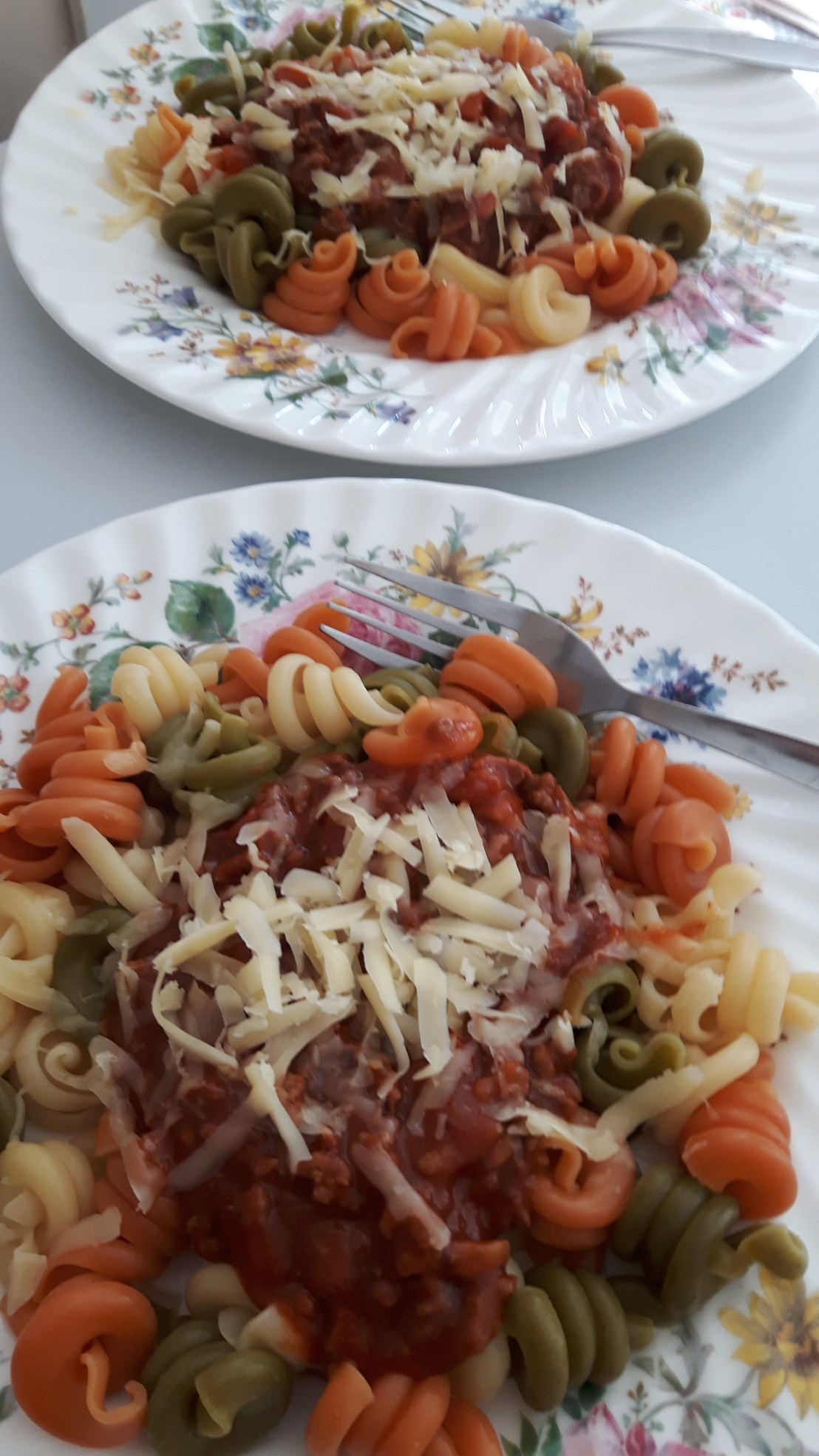
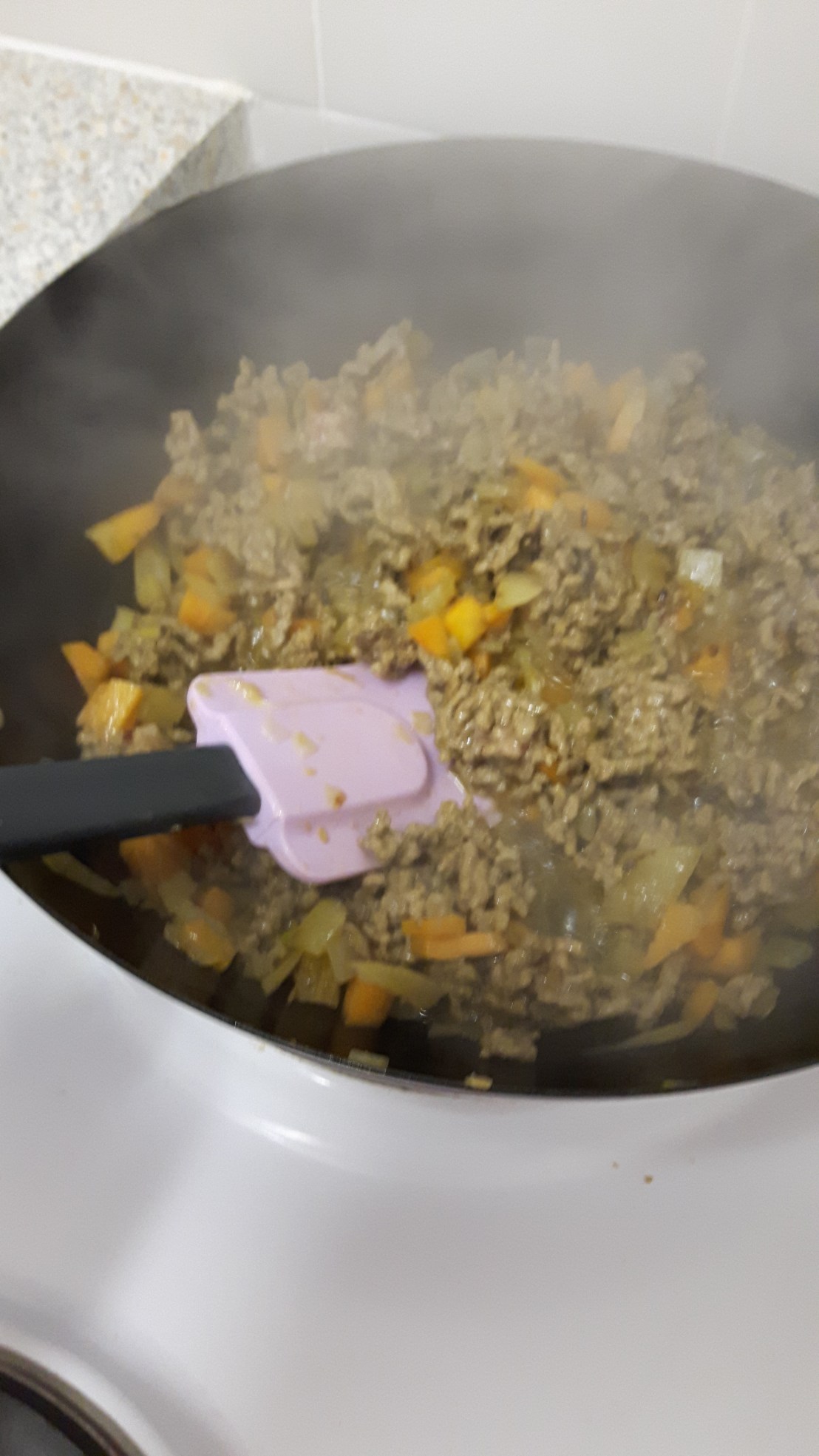
Time for my second dish in the challenge (and second time I’ve managed to cook within a week) – pasta bolognese.

20160605_200508

I know this is a bit similar in content to the first dish, cottage pie (both based round minced beef and veg). However as I’m a single person on a very tight budget I need to cook in this way to avoid waste and keep costs down. I was able to use ingredients I had left over from making cottage pie to prepare this (mushrooms, carrot, tomato, beef stock cubes, tomato passata, etc) and I had the pasta already in the cupboard. I only had to spend £1.70 for the meat.

Dad came for the afternoon so this was our lunch. It fed the two of us and I still have two servings left over which will feed me tonight and tomorrow, so it has worked out significantly cheaper than buying a supermarket microwave pasta meal.

20160606_135016

Ginny xxx

Did I actually just enjoy something?!

Since I came back from my lovely weekend stay with my friend L and her family a couple of weeks ago, I’ve been thinking back to it thankfully and often. In that weekend I felt genuinely positive emotions that have been absent for me for a long time (we’re talking years). Things like happiness at my goddaughters’ interest and excitement at our little activities and projects.  Their unboundedly curious questions showing perspectives so different from mine, especially different from my exhausted autopilot. Time with L. and real thankfulness for the strength and comfort her non-judgmental empathy gave me and really wanting to be there for her too, glad to be able to talk and share in her life, worries, joys, and so on.

Yes, the hard things were still there too. Voices, doubts, exhaustion, anxiety, it doesn’t magically go away. But the good experiences were so unusual for me that they particularly give me pause and I am all the more grateful for them.

Their good is lasting beyond the days I spent with L (nearly 2 weeks so now) in a way that’s more than just a happy memory. Perhaps it’s because it isn’t just a memory in my factual thought; it’s an emotional memory too. That’s stronger and more active and has a more continously creative effect on how I feel. I’m enjoying it and trying to nurture it, in thought and in prayer and in trying to build up some more creative, good experiences, especially where I can give or share something to someone else in even a small way. One thing I’ve been doing in recent days is making greetings cards, which I used to love but had completely lost all motivation or creativity to do. And I’m actually enjoying it, even looking forward to it. I can’t think when I last genuinely looked forward to an activity like this.

Maybe I’m starting to understand what a doctor told me when I was an inpatient in 2014 – that the more good experiences and memories you create, they can slowly begin to replace the terrible re-experiencing of traumatic past events and the automatic nature of obsessional thoughts and the power of the voices. I could not understand how this could work at the time though I really wanted to believe it. Later, in the most desperate times I was furious if anyone began to suggest anything like it. The suggestion seemed to trivialise the terror I was locked into. Yet now, I think I might be beginning to understand it.

Ginny xxx

Making it home

Today, I had some new furniture delivered – fantastic bargains in a local furniture charity shop. (The large number of charity shops round here is a particular blessing for those of us on a tight budget and possibly more creativity than money 🙂 .) So I spent the best part of the day re-arranging and cleaning and installing the items.

I have been in my flat several months now and it is my first place of my own, as opposed to renting a single room as lodger. I am thankful beyond words to finally have a housing association flat. Without this I would never have been able to afford to rent a whole flat as rents are incredibly high here. I cannot believe this place should be mine and thank the Lord for it every day.

I was a lodger in a family home before moving here. The family could not have been nicer and gave me privacy but I was struggling a lot, just as I had been in all my previous properties. That was probably one reason I moved around so much. Apart from financial issues or having to move when jobs ended and new jobs started, getting to a new place sometimes provided a temporary illusion of escape. When the illusion came crashing down it would just be worse than ever.

Anyhow, at the last place my OCD and obsessional thoughts were very hard to cope with and hide and my anxiety was increased because there was a young baby in the household, which seemed to increase my fears that I would cause people harm. At my worst times, which was becoming most of the time, I would dread bumping into anyone in the shared kitchen and having to speak, so I just stopped preparing food. The close proximity to others made me want to run and hide. So hide I did, in my room, which was the only place to spend time anyway, since there was not a shared lounge, only a kitchen (and bathroom, but that’s not exactly the place for small talk or hanging out). Then once I was in my room for any length of time, I felt trapped. The panic attacks, flashbacks and terrifying thoughts would come and there was literally nowhere to run.  There was not anywhere to go to get a breathing space or a different environment or to be in a different place for a while to help me step out of what was happening in my head. I’d lie on the bed or sit on the chair and do my best to employ the distraction or self-soothing techniques the clinicians told me but feel I was just suffocating in the world inside my head.

I can’t say how helpful it now is to have more space. It turns out that it really is true that you rest better when the bedroom is set apart as a relaxing place. I have the space I need in the kitchen to cook when I am able to. It is rare that I am able to at the moment, for many reasons, but the fact that I have my own kitchen does at least increase the likelihood that I will prepare food. My lounge is cosy and I’m even so fortunate as to have a view out to the communal garden. I have a very tiny garden and a flowerbed and although I do not enjoy gardening, I do like to keep it tidy and there is a certain satisfaction in pulling the weeds from the earth to let the little plants breathe.

In some way, I can begin to make this flat my own. Having a place where I can start to feel safe in the space, make some choices about how to lay it out, use my creativity to make it the way that I enjoy and even bring other people into it, makes it a home. Caring for it (cleaning, tidying, doing the little flower bed outside, feeling thankful for what I have) gives a constructive focus.

Much as I was longing for a home for a long time, I am still surprised at the difference that it makes to have one. Often I do not realise the value of doing something quite simple towards making it more of a home – such as tidying and choosing how to arrange things, as I did today, or perhaps painting the walls the colour that you like. Even on the very bad days, being in this home makes it slightly better, somehow. Maybe it’s a little bit less scary, a little bit safer, a little less unpredictable, a little more space, or a little bit more of beautiful or positive things around me.

Thank you dear Lord, for HOME.

Ginny xx


Lullaby for a stormy night #4 – Nana’s

I’m continuing my “Lullaby” series on finding places of safety, after something of an intermission – sorry.

The place I felt safest as a child was at my (maternal) grandmother’s – Nana’s. She was the only relative other than my parents with whom I had contact in my childhood, with the exception of a great aunt and her son who I saw on a couple of occasions, and a handful of more distant relatives on my mother’s side who I met at my grandmother’s funeral.

There is a photograph of me aged about 3 or 4, standing on the steps of our house, ready to go to Nana’s for my first night away from home. I am not sure how many times a year I would go to stay at Nana’s, but it was every so often, and until my mother’s first hospital admissions, I believe it was pretty much my only experience of a night away from home without my parents, with the exception of a rare couple of sleepovers at a playmate’s. I did not go to school at the normal age so did not experience school trips and the like.

When I was born, Nana lived in the countryside, but soon moved into a nearby town, and I clearly remember her bungalow, with its grass in the front, the driveway leading down to the neatly kept garden at the back, with flowers and a tiny vegetable plot tucked away in the corner, where she grew mint. I’m sure she grew plenty else but for some reason it’s the mint I remember. Perhaps that’s because when she was boiling new potatoes she’d let me run out to pluck a sprig to flavour them. I remember where she would hide the spare key (there was a rotation of useful plant pots and garden ornaments). I remember ringing the bell at the dark reddish wooden door and looking up and being intrigued by the cowls spinning on top of the roof and the fact that she didn’t have a chimney pot like ours. It’s strange the details that stay with you.

As I got a little older, I would spend two or three nights with her. The routine and stability was comforting and so different from home. I knew we would wake up a little before eight o’clock. I’d jump out of the big bed where I slept and run to “wake” Nana, who would be waiting for me. We’d make plans for the day, then I would help her to set out the table for breakfast with the delicate blue and white crockery, the toast rack, the Rowntrees lime marmalade, the Bran Flakes, the milk jug. I would have Bran Flakes then toast and marmalade. Nana would have Allbran, a banana, then toast and marmalade. Then the great decision had to be made as to whether we’d have our main meal for lunch or supper time.

We’d always wash up before we went out. (To this day I often remember her advice – you should always wash up before you go out. Otherwise if your house got broken in to and the police had to come round, it would look terribly messy. I think that if your house got broken into, it would probably look terribly messy anyway. Nevertheless, good habit I think!)

We’d go out and walk into the town.  This was a completely different experience from going into town with my mother. With my mother, it was preceded by a lengthy preparation of exactly where we would go, who we would see, what we (I) must say, what I must be careful to do and not to do in case anyone was watching; it was followed by an analysis of what had happened, what had been said, in particular my behaviour and numerous comments on how strange things or people we had seen were. With Nana it was fun and free of requirements and consequences. We would often stop to chat to people she knew, from her lawn bowls club, Church, or the hairdresser. Looking back she was clearly warmly thought of and much liked, and known in the local shops like the butcher’s, the optician, the grocer, the market. Even in one of the two supermarkets we frequented, many of the assistants would smile and greet her cheerily.

Often we’d go to the swimming pool (the Lido in the summer, where I learnt to swim, or the fantastic indoor pool in the winter, which had two huge water slides that were too scary for me to ride but fun to watch, a wave machine, a shallow end with bubbles for babies in armbands to bounce through, and the most enjoyable way of entering the pool, by walking down a sloping floor with painted tiles to reach the deeper water, rather as if you were walking into the sea. This was certainly much more fun than just climbing down a ladder and sliding in, as we did when I went with Dad to the pool near home.

Or we’d go to the park. Sometimes it would be the big park where there were plenty of ducks to feed (this was long before the signs telling us how bad bread is for ducks!), paths to follow, pine cones to collect, weeping willows to play under and a play park with a big silver slide. Sometimes it would be the amusement park nearer the bowling green, where there were swings and a see-saw.

We’d talk and chat constantly. She was so very patient and loving with me. I must have exhausted her as I really did chatter a lot as I relaxed and found her also relaxed and happy to listen. She must have been shattered when I went back home! How totally unaware of it I was at the time.

Sometimes I’d tell her about what I had been learning, but without the gripping fear of getting something wrong, at least unless she discussed things with my mother afterwards. Then I knew that there would be another of my mother’s analyses of everything I had said, questions and probing and why hadn’t I done this or said that, why had I given the impression I couldn’t do x, why was I pretending to be stupid…

We’d see the Warden who kept an eye on all the residents in the complex of retirement bungalows. Most mornings she would pop in for a chat and a cup of tea with Nana. The Warden had a sweet little dog called Pepper and we would take her for a walk sometimes. She was about the only dog I was not afraid of at that age. Pepper loved bouncing along on her lead but she thought she was a baby too and would let you hold her on her back in your arms and tickle her tummy.

Nana would tell me about everything from funny things that had happened when she was out shopping or at her bowls club, to what she had done when she was a medical volunteer in the War. We’d water the garden, do the housework and do the cooking (my mother always said that Nana was a bad cook but actually I think she was rather good). In the evenings we’d often watch some TV or one of Nana’s video tapes. The Sound of Music was my first introduction to musicals, and my favourite, closely followed by My Fair Lady. Poor Nana must have been quite fed up of playing those every time I came round, but in the tape went and we’d watch whilst we had a piece of fruitcake or a couple of digestive biscuits and a cup of tea.

Often I’d draw her pictures, or show her my ballet, dancing round the room to one of the cassette tapes she’d play. We’d look at her beautiful glass paperweights and treasures in her display cabinet. A pottery model of an elegant lady in a blue dress and yellow shawl fascinated me. When I was too young to pick it up myself, I’d ask Nana to show it to me, and she always would. There was a brass statue of a dancer which had once turned round and round when you wound up the base, although it had stopped working. I wanted to dance my ballet like that dancer. But Nana would look sad when I asked her about it and I dimly remember her saying that yes, it had got broken a long time ago, but it was very very special. I wonder who gave it to her.

Nana had lost many very dear people in her life, including a brother, a husband and two very close friends. She had suffered serious illness during the War years and nearly died. Just sometimes, when we were together I would glimpse something I did not understand and puzzled at, which I would now say were glimpses of hurt and loss. I do not recall her ever speaking in anger or frustration and very rarely did any sadness show. She was so warm and so calm all the time and in such contrast to my mother. I can only begin to think what I did not know about and what she very rarely ever let on. I don’t think she had surviving siblings (though we had so little contact with the rest of the family that this could be wrong) and I rarely recall her having conversation in depth with my mother, her only child, at least not without that desperate tension building up so quickly. She was there for me. I wonder who was there for her. She did clearly have many friends who were delighted to see her and I hope that she found good support.

Nana and I developed our own play world of make-believe. I’d make up stories to tell her and she loved to listen. I had a very strong imagination (I think it was more than an imagination, but that is for another post). I made up a family for myself, consisting of about five children for me to look after, giving them all names and personalities. Most of them I can’t clearly remember, though I do recall the eldest was called Amanda. She was well behaved and helped me look after her younger sisters.  I’d tell Nana stories about my made up “family” and often write them and draw pictures. Nana would listen so patiently again and really seemed interested and happy to hear about my stories. They’d make her laugh sometimes. I knew very well that it was all make-believe but I revelled in the fantasy play. From visit to visit we’d continue the story where we left off the last time and the “children” I invented would grow steadily older and change. It was a precious thing that I shared with her alone and never told my parents about. It served as a way to explore the ideas of family and children and caring roles and to play out some of the relationships I did not encounter in my real home life. I wonder where I got several of the ideas about caring for my “children”, because I wove into the stories many aspects that did not exist in my own home life, especially structure, security, routine and companionship. Perhaps I learnt a lot of it from Nana.

It was our world only. When Nana died, my mother found a lot of the pictures that I had drawn for her and stories I had written. I remember coming into Nana’s bedroom and finding my mother sitting on the side of her bed, going through the sheets of paper, reading every single one. I was hurt and angry beyond what I can explain. It was not for her. It was for Nana. It was our make believe. Desperately I did not want my mother to see it. I think I feared what would happen because she had. (And yes, it turned out I was right to – though she didn’t say anything to me at the time she did use it as more ammunition against me, a few weeks or months later, to claim that I was pretending and lying and punishing her.)

Looking back I am so touched that Nana cared enough to keep every one of the silly little stories and drawings. I’m astounded she cared that much to keep every one I gave her.

I am so very thankful for what we shared together and that I had this escape to the safety of her house for the few days at a time I would spend with her. I could be a child there. I was not bad there. I was not dangerous. I could please her and not do harm. I could trust her. I could speak. We could hold on to what we shared together and keep it special and I knew that I would find it again the next time that I went to be with her.

I sensed early on that my mother often did not get on well with her mother. Though there were barely ever big arguments between them, at least not in my presence, looking back I can tell that there was a massive amount of tension and I think I sensed this as a child also.

For reasons I still do not fully understand, my mother disliked more and more me going to stay at Nana’s. She was more and more tense, watching harder on the times when she was around at our house (which were becoming rarer still) or when I spoke to her on the telephone. She would quiz me deeper about what she had said, what I had said and why. She talked more and more about how she thought it was not good for me to go to stay with Nana and how she knew that really I did not like it and that it was okay to feel that and that I ought to go to stay with her much less and we’d cut right down the number of times I saw her.

I was terribly confused. I did like it! I loved it! I loved her! I wanted to go and stay with her and I wanted to stay longer and longer and it hurt more and more as I got older when it was time to come away. Because, the terrible thing inside me was that I did not want to come away. I did not want to go back to my mother. When I was older, I felt sick inside when I knew the end of my stay at Nana’s was coming, frightened and dreading returning to my mother. I learned to hide it although a couple of times I couldn’t and I cried and cried. I wanted to be at Nana’s. Not at home. Nana’s was safe. I was full of guilt. Now here was Mother saying that she knew I did not really want to go there and how much better it would be once I stopped having so much contact with her. Then it would all stop, wouldn’t it, and things would be okay again between us, she’d say. What was I to say?

I could not identify at the time the abuse that I was experiencing almost daily, much less tell anyone, or ask for help. All I knew was that it was me. My fault. I was the bad one really. Everyone else would think it was my mother, if anyone ever found out, if anyone ever saw, or heard. Nobody would think a child could be doing what I was. But really, she would know and I would know that it was me. She and my dad would be taken away and it would be all because of me really. What I was doing to her, how I was “demonstrating that I was damaged”, how I was “getting her back” and “punishing” her, she said… Oh yes, I was bad, I knew that clearly. When was it going to happen next? How could I stop it? And look, just in case I doubted how bad I was, I did not even want to be with my mother.

She said everything would stop if I agreed not to go to stay at Nana’s. So, I agreed. Because it seemed to be what I had to do to keep my mother safe, to stop the evil. I regret it so so so much that I ever agreed. With all the love that I had for Nana, everything she did for me, the protection that she gave me, how could I agree that? How could I have agreed that I would see her less? Pretend to agree that I did not want to go to stay? My mother’s control over me and my need to do what she wanted and please her and agree that her version of the world was true, was absolute. In no way does this take away my guilt. I still said it. I still agreed.

Looking back, I think Nana was often perplexed by things my mother did or said, or by what I reported to her she had done or said, or by things my mother said about me to her. In the same way as my father found a way to contain things and hold things down, I think she found her own way of relating to my mother to hold some kind of peace and prevent conflicts and try to repair and fill in the expanding cracks as my mother’s illness fragmented her world more and more away from reality.

I think Mother knew that the cracks were widening in the isolating insulation that she built around us in her illness. I think she knew Nana was realising and that instead of filling them in and papering them over, Nana would no longer accept at all the world my mother built, and it would collide hard with reality and it might crumble.

I wonder what would have happened if I had told Nana. I wonder what would have happened if I’d told Nana that Mother had said that but really, I wanted to be with her and didn’t want to leave. If I had kept telling her the things my mother said to me and did, the things that I think I realised even then, Nana was starting to realise were bizarre and wrong.  On the few occasions I was met with Nana’s confused questions about why Mother had done or said this or that I’d say that oh I must have got it wrong and yes it can’t have been like that. If I had spoken honestly instead of giving in, I wonder what would have happened and whether Mother would have got help sooner and whether my father would have been saved many, many years of pain and whether my relationship with Nana would have grown and I’d have been able to continue to love her and be with her and thank her, eventually, for every safety and security and love she gave to me.


I did not speak. I accepted my mother’s world only, and only her view of who and what I was. I agreed with what she wanted.

My idea of time is foggy then. Her illness intensified, stranger and more frightening things happened, she went into hospital… she would be absorbed for hours with paperwork and rather than the constant watching, she did not interact with me at all for large parts of the day… time stretched and slipped and my fantasy world grew stronger.

So I am not sure exactly, whether it was weeks or months or a year, but it was not very long after then that Nana died. I was taken to see her at the funeral home. I remember kissing a white rose to be laid with her so that it would take her my love. I remember looking at her and seeing that young as I was, it was not frightening at all, though I was shocked by the cold in the room.

It hurt so much.

Yet thinking back I think it seemed she was content, ready, and at peace. Though I could not have articulated it at the time, I think I knew that.

It hurt over and over through the very long period it took for her things to be sorted through and her bungalow to be got ready to be sold.  I remember crying alone and trying not to be found upset (though this clearly didn’t work) unable to share what I was feeling with my dad or even less my mother and the hurt and loss being mixed heavily with guilt. I was distraught at the loss all over again whilst very slowly the bungalow was emptied and when I left it for the last time. A part of the safe place and a part of what Nana gave me and what we had shared between the two of us, had remained there to the very end.

In my church, today is All Saints Day, when we remember and give thanks for our loved ones who have passed on ahead of us in the mercy and peace of God and are Saints in Heaven. We pray and give thanks for them and ask for their prayers for us, just as we may ask friends with us on earth to pray for us, since enjoying as they do the fullness of the peace and glory and unity with God in Heaven, all the stronger their prayers will be to assist us. So it is particularly fitting that I remember and thank Nana today. In fact, she was the first person who took me to a church and I vividly recall sitting beside her, singing the hymns, going up to the altar when she received Communion and the Priest blessing me. What I experienced receiving that blessing stays with me, a loving Presence, thought I cannot describe it properly. I believe that the first seeds of love were planted there which would later draw me safe to the Church and our loving Jesus.

I’m praying for everyone who has lost a loved one, who is hurting and in need of comfort and company, and for everyone who struggles with regrets. I’m praying you be encouraged and that hope can be held somewhere that it will be well.

Ginny xx


Sitting with uncertainty

“Sitting with uncertainty” is a phrase I first heard one of the psychologists for whom I used to work use.  The department that we worked in was going through a lot of change at the time and I think we were all anxious about what was to come – changes to our jobs, changes to service users’ treatment plans, worries over how we would continue to give good care and whether or not the changes would bring good.

As we talked, it struck me it is a challenge and a skill valuable to acquire across so many fields of life, particularly therapy and social interaction. It is a theme coming out prominently in my therapy at the moment.

I like the phrase “sitting with”, in particular, as it describes living in/with and encountering uncertainty without judging or supposing a particular response.  We might more commonly think of “resolving” uncertainty, “dealing with” uncertainty and so on.  However, sometimes it simply is not possible to do this. We cannot find a definitive answer, we may not be in a position to change (at least certain aspects of) our situation, or we may not yet, or even never, be able to be “sure”. Especially in interpersonal sharing of values and thoughts and emotions. Then, we might also commonly talk about having to “accept” uncertainty and say we have to learn to do this as part of growing up.  However, can we always do this? Perhaps often we feel that we cannot truly accept it, for instance, because it may be intensely uncomfortable, or something we really wish was not there, or something we feel frantically, painfully driven to eliminate. Hence, I like the words “sitting with”, because it describes the situation and at the same time acknowledges there may not be a resolution and attaches no judgement or obligation to either resolution/removal or acceptance.

In the language of the MBT therapy I am participating in at the moment, perhaps we would say it describes the situation and allows us to explore or be curious about the existence of the uncertainty.

I’m starting to be more alert at identifying uncertainty, and it’s effects on me.  It’s clear there is uncertainty about events that have not yet happened (I can’t be certain what will happen tomorrow), or that we do not know about (I can’t be certain if my friend would prefer me to buy the pink or the red mug for her birthday because I don’t know which is her favourite colour), or that are for now out of our control (if I have just had an interview and I know I did my best, but it’s now with the interviewer to make their decision, I can’t be sure if I will get the job or not).  And so on.  These are just some categories that sprung quickly to my mind which I think we might recognise are particularly difficult for someone who suffers a lot of eg anxiety or depression. For example, if we have a sense of dread something awful is going to happen, we might be terrified about what will happen the next day.  If we are socially anxious we might worry a lot about doing or saying the wrong thing or upsetting someone or being thought stupid because we do the wrong thing. If we are desperately seeking a job and have had lots of rejections we might feel very low waiting for the outcome of an interview and frightened about what will happen if the interviewer thinks we are rubbish and we don’t get the job.

It took me longer to consciously recognise how much uncertainty is going on all the time, particularly interpersonally, and how much – even though I did not recognise it – this affects me.  This kind of uncertainty seems to me to be a difficulty often encountered by people with personality disorders like me, and no doubt, many sufferers of anxiety or other conditions as well.

There is just so much that it is not possible to be certain of. This can be a frightening thing to me.

If we are speaking to someone, can we really be sure that the meaning they have understood is exactly the same as the one we intended? Probably not – every person expresses him/herself differently, and words hold different connotations for all of us in different situations. Could there be implications in what we have said that we did not intend, but that the other person infers? Probably. Could this hurt or offend the other person? Possibly. (For example, if I come home after work and my sister is sitting in the living room reading a book. I say, “Oh dear, this room is a bit of a mess.” I could be thinking that I really left it in a tip that morning because I rushed out to work late, and I shouldn’t have done that. If my sister were already feeling guilty that she had intended to tidy up that afternoon but had not been able to because she hadn’t felt well, she might make the interpretation that I had been intending to imply, “Why haven’t you tidied up, you’ve been at home all day whilst I was out at work?” It would not have been my intention, but she might have taken that understanding, and so without intending it I could have upset her. And if I then realised that, I would feel bad that I should have chosen my words more carefully or not said anything at all.

If we have an emotional reaction to a comment, an event, a situation and so on, can we be sure whether we should communicate it? What effect communicating it , or not, may have on another person? Can we be sure what their emotional reaction really is, and whether they are being open about how they feel? What if we feel something very different from what they do? Does that make us wrong? Or stupid, or bad, or… the list goes on. How do we respond, what do we do, when our emotional reaction or our thoughts are very different from everyone else’s? Does that mean there is something wrong with us?

And the ever, unanswerable, uncheckable, frightening question – have I done something to hurt someone? Am I really evil inside? Have I done any good, even though I think I want to, have I done good or have I done bad? Have I done something awful without knowing? Does everyone know I’m bad really and I just fool myself if I ever think I do good? Is there a terrible evil thing in me that I can’t control? We don’t always know even what we ourselves think or feel or intend – do we? Can we ever be sure enough that we are good not bad?

It is much, much harder to ever definitively answer these questions than it is to answer some of the other kinds of obsessional thoughts or anxieties which have a more “external” or “practical” element.

In part 2 of this post, coming soon (tomorrow, I hope!) I will continue with this thought to describe some of the thought processes and actions that this then triggers off in my personality disorder, and to think about how to learn to sit with these kinds of uncertainties.

…..More soon!….

Ginny xx

Not working out….

“I shudder to think what the state of my in-tray would be if I was away from work for five days!”

“Yes, someone might slip dragon dung in it again, eh?” said Fred.

“That was a sample of fertilizer from Norway!” said Percy. “It was nothing personal!”

(JK Rowling, “Harry Potter and the Goblet of Fire”)


Well, I haven’t found any dragon dung yet, but I certainly have been having problems with my in-tray.  It has really not been a good few months at work and now everything has finally come crashing down.

All my life I’ve found a kind of escape in work.  As a primary school age child, I was taught at home by my mother who suffered severe mental illness.  Achievement, excelling and perfection was of such importance to her and the only way to avoid her accusations, threats, shouting, violent distress, which would erupt when I could not do something or did not do as she wanted. It was the only way to be safe by avoiding this explosion and avoiding the harm I appeared to cause, escaping the danger and catastrophes I believed would ensue or did ensue. (This probably warrants another post at some point.)

When I went to secondary school, I physically escaped her illness for a portion of the day. Soon I worked out that if I stayed at school as long as possible (extra clubs, volunteering, staying on to do some of my homework at school rather than going straight home at the end of the day of classes) I could escape for longer. Working in my bedroom in the evenings was preferable to staying under her intense gaze, or risking conflict if I was around her. Being used to the need for excellence, I worked as hard as I could, so though I was nothing particularly special or noteworthy I got good marks by virtue of the time I put in, and this too was “safe”. It secured her approval too sometimes.

I continued to work as hard as I could and give my all in every job I’ve had.  Perhaps it’s something that comes fairly naturally to me in my character.  If so it’s a gift I am thankful for.  It is very important to me to do a good job, give my best, serve the people I am working for properly, offer my work in prayer and dedication.

It has been a way to escape from the noise in my head, the hollow emptiness and uncertainty, flashbacks and panic attacks. Focussing on work takes me away from myself, to look outside and to others, to keep my concentration on the task in hand. Although I have never had much self-confidence, I have gradually learnt there are some areas I have some strengths and where, even if I may never be satisfied, my managers at times do seem to be. So whereas pervading most areas of my life I have suffocating fears that I am going to hurt someone, that I’m bad inside really, at work at least I can hope objectively to do some good, give a good service, help someone.

All that has come crashing down in the last few weeks. I’ve been on a phased return to work since I was last off sick after being in hospital.  I’d got up to about 4 days, to accommodate therapy appointments at hospital.  For several months the pressure of the workload seemed to be increasing.  I was getting more and more stressed and though it was agreed in principle for me to go to my appointments, there was not any support in terms of managing the workload or anyone covering during my absence, so work built up, causing more stress for me and more anger from my managers.  I tried to address this, together with the general atmosphere, which was becoming more and more uncomfortable and hostile.  I did manage to have a few brief discussions with managers and was never told that there was a problem with my work and my appraisal earlier in the year was, to my surprise, good as well.

A month or so ago the pressure built up to a point I could not cope with and I insisted that something needed to change.  At this point, I was told that there is not much on, it is not busy, nothing much is expected of me, everyone knows I cannot cope with the work, and people hold back giving me work because they know I can’t cope with it. The fact I do extra hours was used as a fact to support the idea I cannot cope with the work because it shows I can’t get the work done in the standard working hours (whilst I would say there was simply too much work to get through).

There were many other things said that were very upsetting which I won’t go in to here, partly because I don’t want to say anything directly identifiable to my employer.

But basically, I was told that I’m rubbish and I cannot cope with the job an don’t get through the work, and that I am not providing the kind of service that I am supposed to because people know I won’t be able to cope with it.

So many feelings went and are still going through my head over this.  Partly anger and shock, because I had found that it was busy and was giving everything I good even to the detriment of my health.  This was so contradictory to all the feedback I’d had before – why? Then fear and anxiety. I didn’t even know I was doing so badly or that people were so unhappy with me.  I mean, I knew they were unhappy with me, and thought they think I’m stupid and don’t do what they want quickly enough, but I hadn’t realised how incompetent I actually was.  It’s even worse that I did not realise how bad I was, because I fear so much in my life that there is something horrible and bad in me which I’m not aware of and can’t control, which hurts people and I don’t even realise it, means that my family even can’t stand to be around me.

I had hoped work was one area in which I could do some good but now this is gone too.  It was what I was clinging on to and trying to keep going.  Even though I could see in a way it was doing no good to me because I was so stressed and couldn’t cope with other areas of my life at the same time (not looking after my flat, not cooking, getting mixed up over bills, so drained I did not socialise with anyone outside of work).

I know that my concentration is not good, that I dissociate for periods of time and lose track of time when I am stressed and very upset.  I know I do not work as quickly as I used to.  I didn’t realise the extent of the effect it was having.  That I can’t do my job.  That my perception of the situation should be so different from other people’s – I thought I was giving everything, I thought there was pressure, when other people are saying there is no pressure, it isn’t busy, and I can’t do it. That is frightening to me.  According to my therapist, a disconnect between one’s own experiences and other people’s, and a difficulty dealing with this, or dealing with situations in which our emotions and feelings are different from others’, is common in personality disorders.

I don’t know where I go from here.  I called a couple of advice lines and they told me that possibly I have some case to say that more could have been done to support me, with more “reasonable adjustments” at work.  I looked into this and wrote down a case around this but I couldn’t go forward with it in the end.  I doubt my own perceptions and feelings too much and even writing it for myself, I felt like a complete fraud, that I’ve invented everything and the problems lie all with me not my employer.  The voices in my head are telling me I’m nasty, disgusting, invented it, liar, fake, you’ve invented a story to accuse people of things… I just cannot cope with that and know how much more intense it would be if I actually tried to put anything in. Crazy, I know, but that’s what goes on in my head.  I’m scared in the end that I’m just bad and evil and greedy inside.

In the end, my employer has told me I’m not coping with the job and not competent and I think I’ll probably be dismissed.  Even if not my GP and specialist have told me it’s too stressful an environment.  I need to get out of this role and do something less pressured and stressful and where I can engage in the therapy I’m doing at the minute, get to appointments and get support. I agree with them.  Even if I am dismissed or do have to take the decision to leave, the one good thing I can see is that at least I am choosing to try to do something to put my health first, for the first time. Not admitting what I need to do in the past has just led to things getting worse and worse.

But it’s scary right now. I’m signed off sick at the moment. I feel empty and frightened and anxious all at once and there’s too much space for the spiralling thoughts and fears in my head.  I’m trying to focus on positive and creative things. I don’t know how to trust myself at all because even in the last things that I trusted I could do properly, it seems actually I wasn’t doing a good job at all, and everyone except me knew it. So many jobs have ended in the past  and I so want to find something that is sustainable but where I can engage with my therapy as well.

I’d love to hear your thoughts on work if you’d like to share them. Is work a good experience or a bad one for you? What kind of work you find is good for you and something where you can give your skills and abilities? If you find part time work is helpful and how much flexibility you find employers can give to be able to go to therapy appointments as well as working?

It seems like a very anxious and uncertain path at the moment.

Ginny xx