Category: The emotional and the physical

Sorry for my absence this week….

Warning: this post mentions hallucinations, self-harm and suicidal thoughts, my distressing thoughts and voices and the darkness I’m feeling right now. If this may be distressing or triggering for you, please take care.

…. It has been a very bad week. I am sorry for not posting for a while. As I do not have the internet at home at the moment it’s difficult anyway. It has also been a really bad week. The hallucinations are growing / getting more frequent and it’s scary. I am so so tired and really wish I could escape and things all stop. I’m so scared and I wish someone were with me, I wish someone would hold me and tell me it would be alright although in my head it never, never is and I feel so stupid and needy and incompetent and childish and everything else for so much needing that right now. I feel so alone. It hurts but it’s numb as well. I really need to be able to talk to and see a friend but the only two people who live close by are just too busy, their lives too full and too difficult already and I know I would be everyone’s last choice to spend time with, kind as they are, and as much as they have given me. I cannot ask for more. Then the horrible monster inside me tells me that if I had a friend feeling like this and needing help I’d go to be with her straight away, why am I always alone and not allowed anyone? Then the guilt comes crashing back, how dare I be so childish and needy, greedy, ugly, disgusting, go on, get it out, cut and cut and scratch and vomit til you get it all out you sick revolting evil thing…

I want it to stop. I nearly ended it last night. There is really a limit somewhere and mine has been reached over and over again. It’s very dark right now.

I need to write and want to write and perhaps this will build some way to keep going.

Ginny xx

On panic, lemons and stitching patterns

On panic, lemons and stitching patterns

I’ve posted before about how I find that colouring intricate patterns can be very calming.

When I was an inpatient I drew and painted a few times, which I had not done for many years. I go through phases of doing a lot of cross-stitch embroidery or making greetings cards. It seems to be something that I do a lot of and then leave for a while then return to it. Sometimes I find it helpful and calming but other times, I really want to be able to do it but am not able to. If I try to push myself to, it just doesn’t work – I go wrong all the time when I try to follow a pattern, or I just can’t put together anything pretty. Then far from helping I feel dragged down lower. It’s as if when I am completely drained and lacking in emotional / mental energy, there is nothing with which to be creative. In those states I often need to sleep, or paradoxically, to do something physical like getting outside and walking.

I’ve been on two different wards as an inpatient. One of them had a variety of craft activities available and support to use them and discover and learn new ideas for projects. For example we learnt to make plaited bracelets, worked together to put together a collage display, coloured stained-glass window images, and so on. The peer support worker spent a lot of time facilitating these activities. The other ward did not really have such resources and there was nobody to support these kinds of activities. The first ward seemed much more an environment in which it was possible to focus on having hope of getting better and learning skills to cope. Of course the access to creative materials was not the only reason (I think the work of the peer support worker was very important and I will post about that separately). However I think it made considerable difference to how the days passed.

I think in working with simple materials to create something beautiful, you can empty your mind, practise mindfulness techniques, slow some of the frantic anxiety as you become absorbed in the task. The concentration it requires and the different sensations you encounter – textures of fabric and materials, sounds, colours, deciding how to combine them, perhaps repetitive and rhythmic motions, the sense of putting together something lovely from all the separate parts – all of this helps occupy your mind. In  a similar way to distraction techniques, by filling your mind with all these sensations, they can become the focus, rather than obsessional thoughts, sadness, anger and so on. It does not solve anything but can replace some of the intensity of an emotion for a time. I can find it helpful in trying to delay self-harming as well as in times of generalised anxiety or after panic attacks. My friend who suffers with an eating disorder said that in particular having something to do with her hands can calm her after eating and help her resist the urge to binge-eat and/or purge.

My clinicians explained that there is a limited number of sensations the body and mind can experience at any one time. In personality disorder, our emotions may reach a higher level more quickly and in this heightened state, we cannot think rationally or mentalise or make good decisions. We cannot see outside of the emotion. It also takes longer than it does in most people for the level of emotion to fall. One thing that can help the emotion to fall, to get to a level where we can start to mentalise, use distraction techniques or choose to do other things that help us, is to “shock” the body with another strong sensation. For example, putting your hands under very cold water, holding ice, or (this one works well for me) eating something with a sharp taste. I use pieces of lemon, or lemon juice, with a sharp and bitter taste. This can help to lead you out of extreme distress or a panic attack, to the point that you can then address how you are feeling with other techniques. Then continuing to do something that gives positive sensations can continue to calm you – for example, something self-soothing like hugging a soft pillow or wrapping up in a soft blanket, or perhaps one of the creative activities which provides a range of tactile sensations.

There is also something encouraging to me in being able to create a picture, object, etc, which is useful or attractive or perhaps can be given as a gift to someone else, even when we are really not feeling great. It’s another way to make it true that the overwhelming emotions are not all that there is and to start to hope that there could be some good somewhere in me.

Ginny

xXx

Making it home

Today, I had some new furniture delivered – fantastic bargains in a local furniture charity shop. (The large number of charity shops round here is a particular blessing for those of us on a tight budget and possibly more creativity than money 🙂 .) So I spent the best part of the day re-arranging and cleaning and installing the items.

I have been in my flat several months now and it is my first place of my own, as opposed to renting a single room as lodger. I am thankful beyond words to finally have a housing association flat. Without this I would never have been able to afford to rent a whole flat as rents are incredibly high here. I cannot believe this place should be mine and thank the Lord for it every day.

I was a lodger in a family home before moving here. The family could not have been nicer and gave me privacy but I was struggling a lot, just as I had been in all my previous properties. That was probably one reason I moved around so much. Apart from financial issues or having to move when jobs ended and new jobs started, getting to a new place sometimes provided a temporary illusion of escape. When the illusion came crashing down it would just be worse than ever.

Anyhow, at the last place my OCD and obsessional thoughts were very hard to cope with and hide and my anxiety was increased because there was a young baby in the household, which seemed to increase my fears that I would cause people harm. At my worst times, which was becoming most of the time, I would dread bumping into anyone in the shared kitchen and having to speak, so I just stopped preparing food. The close proximity to others made me want to run and hide. So hide I did, in my room, which was the only place to spend time anyway, since there was not a shared lounge, only a kitchen (and bathroom, but that’s not exactly the place for small talk or hanging out). Then once I was in my room for any length of time, I felt trapped. The panic attacks, flashbacks and terrifying thoughts would come and there was literally nowhere to run.  There was not anywhere to go to get a breathing space or a different environment or to be in a different place for a while to help me step out of what was happening in my head. I’d lie on the bed or sit on the chair and do my best to employ the distraction or self-soothing techniques the clinicians told me but feel I was just suffocating in the world inside my head.

I can’t say how helpful it now is to have more space. It turns out that it really is true that you rest better when the bedroom is set apart as a relaxing place. I have the space I need in the kitchen to cook when I am able to. It is rare that I am able to at the moment, for many reasons, but the fact that I have my own kitchen does at least increase the likelihood that I will prepare food. My lounge is cosy and I’m even so fortunate as to have a view out to the communal garden. I have a very tiny garden and a flowerbed and although I do not enjoy gardening, I do like to keep it tidy and there is a certain satisfaction in pulling the weeds from the earth to let the little plants breathe.

In some way, I can begin to make this flat my own. Having a place where I can start to feel safe in the space, make some choices about how to lay it out, use my creativity to make it the way that I enjoy and even bring other people into it, makes it a home. Caring for it (cleaning, tidying, doing the little flower bed outside, feeling thankful for what I have) gives a constructive focus.

Much as I was longing for a home for a long time, I am still surprised at the difference that it makes to have one. Often I do not realise the value of doing something quite simple towards making it more of a home – such as tidying and choosing how to arrange things, as I did today, or perhaps painting the walls the colour that you like. Even on the very bad days, being in this home makes it slightly better, somehow. Maybe it’s a little bit less scary, a little bit safer, a little less unpredictable, a little more space, or a little bit more of beautiful or positive things around me.

Thank you dear Lord, for HOME.

Ginny xx


Hearing things

Hearing things

This post contains discussion of experiencing hallucinations, or sensations, which are not “really there”, as well as in very general and brief terms touching on self-destructive ideas. I put this as a warning because I am not sure whether this may be disturbing, distressing or triggering to anyone. I have discussed this very little before. Please consider not reading further if it may not be helpful to you. Thank you.

I have a question on which I would be very grateful to hear any thoughts or answers.

My understanding is that in borderline personality disorder, heightened states of emotion for a prolonged period of time can cause transient psychosis and that people who have Borderline may experience hallucinations.

A few other people I’ve met who have Borderline have shared that they experience things which I think might be termed hallucinations, for example, hearing voices, sensing presences, seeing people or things, sensations of touch, and so on. These seem to be with varying degrees of – I cannot find an adequate term – solidity? For example, ranging from the sensation of a presence with you or a sound, to clearly and specifically seeing another person in the room.

I’m frightened by hallucination experiences I have.  I know I am more likely to have them when I am in a state of high emotion. Until recently, I was more likely to have them when alone. Most commonly (I think) they are auditory – hearing someone calling my name (most commonly my mother’s voice), hearing something happening or being said again which happened a long time ago (this is closely bound to my experiencing flashbacks as part of my PTSD), hearing a voice which I am aware is in my head but which appears to come from outside of me telling me to do self-destructive things or telling me how stupid, disgusting, ridiculous, greedy etc I am, or hearing non-distinct voices but knowing that it is accompanied by a sense of pain / anger / urgency in some way. Sometimes I am aware that what I am hearing is in my head (like the voice telling me to do things to myself), but increasingly, sometimes I am certain it was in the world outside (like my mother calling me). More recently, the hallucinations are visual as well, for example, inanimate objects seeming to move or shine. I am always aware immediately afterwards that this cannot be real. Or they can be sensory – this tends to be bound up with the flashbacks again, for example, during a flashback believing that the people present when the traumatic thing happened, the people I feared, or just a non-specific sense of terror that is much more an external sensation than emotion should normally be.

These things are all intensifying. I am scared. I fear am I developing psychotic symptoms? I know my mother’s illnesses started to worsen when she was just a little older than me. Is the same thing happening to me? I would like to know, does anyone else with PTSD or personality disorder experience this kind of thing? Or even, if you are not diagnosed with a personality disorder or PTSD, have you ever experienced anything similar? How do you deal with it? At the moment I have an awareness on some level that these things I’m experiencing aren’t real. How do I make sure that I do not lose that?

I know that these are hard questions and personal questions and I understand you may not feel comfortable to answer. Anything you would like to share, I would be very very grateful for. I really do not want to distress anyone or trigger anyone in any way and if discussion of this kind of thing is not helpful for you I do not want to draw you in.

Ginny xx

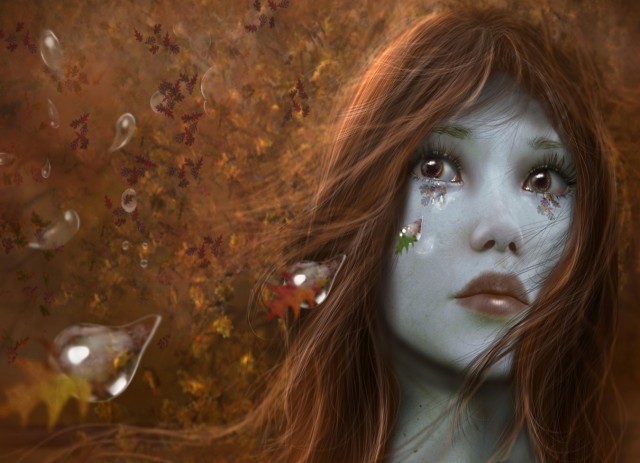
With thanks for image to: http://freewallpaperdekstop008.blogspot.co.uk/

PD and ED – some thoughts about personality disorders and eating disorders

The majority of other sufferers of personality disorders that I have met with, as an inpatient and in the community service I go to now, have difficult experiences surrounding food, for example, having diagnoses of anorexia or bulimia, struggling with fluctuating weight, punishing themselves with food-related actions (starving or making themselves sick or bingeing, or deliberately eating foods they are allergic to in order to provoke a painful physical symptom) and so on.  This is just an observation from what I have encountered and there could be many factors involved – for example, issues around weight do seem to be on the up in the UK (or at least more prominent in media coverage?) and the majority of people I know with personality disorders are women, amongst whom eating disorders are also more common.  However, it did get me thinking and resonate strongly with my own experiences of food and disordered eating and of working in an eating disorder service.

I think food is tightly bound to feelings of anger at self or at one’s own uncontrollable emotions, and makes an effective – though it hurts to use that word – form of self-harm.  When you have thoughts like: I’m so disgusting I don’t deserve to eat / don’t deserve good food only rubbish, I do not deserve to care for myself so I only eat junk, I hate my body for making these demands [to eat], go on you disgusting bitch [I say to myself] look what you’ve done you greedy pig, now get rid of it, throw up til your throat bleeds….you’re foul, you’re disgusting, look how much you’ve hurt everyone, starve and make sure it hurts……. Those kind of thoughts; or even just being too low in the darkness to respond to the basic need for nourishment.

When my eating was the most disordered, I didn’t get specialist help or even much acknowledge the problem in the worst times, despite the efficacy of the function it was serving for me.  I was also blind to it.  My mother (in part because of how her thoughts were twisted by her own sickness) also prevented me from accessing the help that my GP desperately wanted me to get. Now I know that I was underweight enough to fall into the severe anorexic weight range where dire physical consequences were a risk.  My periods stopped and I suffered damage to discs in my back during this time.  (More on my own disordered eating in another post.)  This was long before I was diagnosed with personality disorder (my eating disorder first started when I was about 14) and it is only now, nearly 15 years later, that I am acknowledging it and can articulate what its functions were.

The other day I spied a leaflet for carers in the community service I’m part of, which discussed some of the signs of personality disorders.  “Eating disorders” was actually specifically listed as a “symptom”.  This struck me in particular because personality disorder often occurs jointly with other psychiatric diagnoses but these would not be classed as a “symptom” of personality disorder.  (For example, many people with forms of personality disorder also have bipolar disorder, but bipolar would not, at least to my knowledge, be classed as a symptom of personality disorder – it is a different diagnosis which someone may have at the same time.)

I would agree that struggling to feed myself well and at times, actions that would be classed as eating disordered behaviour, are tightly related to my emotional instability, lack of control over strong emotions or thoughts that are repulsive to me, and the need to punish and hurt myself.  So yes, I would say these are “symptoms” of my personality disorder.

I talked to two friends about the leaflet I had seen – both are highly experienced in the treatment of eating disorders.  One point they made was how much eating disorders are a sign of something else painful.  It’s often thought that once someone’s problems with food and weight are treated, they are “all better”.  However, that is very much not so.  The eating disorder is often masking, indeed a mechanism for coping with, something else.

It could be numbing, or controlling.  Overeating could comfort, suppress, bury, emotions.  Starvation, I think, ironically consumes; the hunger that gnaws painfully eats away other feelings and leaves a blessed numbness.  Thinking back to my own times of starvation, I have to admit that it was, at the very least in a significant part…. fantastic.*  I was wrapped in a protective, protecting numbness, for long periods.  (The times this cracked were utterly terrible, but the times it lasted froze me in a lighter, safer state, so it seemed.)  I will explore more of this in another post.

One struggle in personality disorders is that our emotions may, with less stimulus than it ordinarily takes, reach an unbearable high where we cannot cope or think, where there’s only fear, upset, panic, darkness, anger, sadness… or much more occasionally, extremes of joy (I am not sure why the extremes of positive emotions are so much more occasional.  Perhaps do they just trouble us less as these emotions seem more acceptable, and therefore we remember these extremes less?)  In these extreme states we can’t think, we don’t act rationally, our memory may be affected, and we may take extreme actions like overdoses, self-harm, suicide attempts, and so on.  Then it takes longer to come back down from that extreme state to “normal” – the level of emotion where it is possible to cope and function and think – than it ordinarily would take.

So I think one interaction of eating disorders with personality disorders could be this.  First, the eating disorder may serve the function of numbing emotions in the first place, so that those dangerous high extremes are not reached in the first place.  Second, it may serve the purpose of bringing us down from the extreme, with their numbing, consuming, controlling effect.  It’s similar to other forms of self harm.  When I am in extreme distress and I cut, for a brief time, it deals with the emotion or makes things feel safe again because I can be sure I’m hurting myself, not someone else.

These are just my thoughts and I would love to know more about research into this.  I wonder how much there is.  I have read quite widely in my work and studies about eating disorders but have not come across very much on this topic, beyond the fact that the two diagnoses can occur together.  It strikes me that the interaction between eating disorder support services and other support services like personality disorder teams or wider community mental health teams, is something that warrants much exploration if we are to support someone not only to recover physically from an eating disorder, but emotionally as well.

*When I was in the midst of the eating disorder it frequently did feel fantastic.  I am NOT advocating eating disorders and I know rationally now – thankfully – that it was anything but fantastic when I was anorexic.  I am thankful to be recovered and for the work of specialist eating disorder counsellors and services, GPs and CPNs who so dedicatedly help sufferers.  I urge anyone struggling with food and eating to get help.

At the same time, I am acknowledging that disordered eating does serve a purpose and function.  It is a way of coping.  It is harmful, as overdosing, cutting, other forms of self-harm are harmful and risky, but it is a way of coping, just as I believe other forms of self-harm are.  I think eating disorders are a way of coping with so much more than the thought processes I have outlined here.  It is different for everyone.

I believe – and I think the clinic the two friends I mentioned work in takes this seriously – that for it to be possible to survive recovery from an eating disorder and take the next steps, treatment has to respect that eating disorders are a coping mechanism, and then enable the sufferer to find alternative coping mechanisms, for example in this case, other ways to deal with the terrifying emotions and extreme lows and highs.

Though I never was specifically in treatment for my eating disorders, I am now very very fortunate that the service treating me now is helping me find these other ways of coping, and I think that as this is the start of dealing with so many aspects of my personality disorder, it will also restore my relationship with my physical body and its need for nourishment.

Ginny x